Tephrotic Nightmares is about the sea of ash, a region that was ruined by The Arsonist. Dark Sun had a Sea of Silt, so perhaps I am already biased towards liking this book. The very first thing we learn about this place is water is the currency of note, letting us know what is important and valuable up front. (I was reminded of light in Veins of the Earth.)
The order elements of an adventure are presented in is something I find intriguing. After the introductory page explaining you are exploring a sea of ash, we jump straight to rules for sailing this silt sea in Mork Borg. Luke writes about the various modes of transport available to the players, Mad Max like boats, and the various weapons and defences available to trick them out. The book came with a map and chits so you can play a wargame. Hells yeah!
Factions come next. There are several. Their bases are placed on the hex map of the region. Each faction is described briefly, with a goal, their current challenges, offerings and rituals. These are a sentence or two, and hint at how players may end up interacting them. None are presented in a way that they are explicitly in conflict with one another. The typical units that make up the faction are described, with stats for Mork Borg, along with the vessels each faction uses for travel. Between Luke’s writing and Johan’s art, we get a vivid picture of these groups without too much faffing about.
A bestiary follows. Everything is flavourful, starting with a small and vicious dog, the ash mink. Luke lets you know people are harvesting bodies for water, like Dune. Johan draws some cool witches.
The back half of this book are locations of varying sizes found in the ash sea. There are 22 places in all, starting with the headquarters of 5 of the 6 factions. The region is fairly large, most hexes aren’t described. As this is a sea, that makes sense. Ships move 1-3 hexes per days, so there will be a fair bit of multi-day travel to get from location to location. There are random encounter tables, but I think a GM would want to think about how they want to run the parts of the game that are sailing between locations.
The Bloodhunter Fortress has NPCs who can let the PCs know where to find various monsters. Perhaps the campaign becomes a monster hunter game for a while? The Urniversity will pay PCs to go map a region of the sea. Perhaps the its a game of exploration for a while. The Pyromancers of the Cold Hearth, home of the Burnt Offering faction, will reward players if they find the holy book secreted away within the hidden fortress of the Arsonist, the person who created the ash sea. The Necromancers of the same faction want that book as well. More adventure for the PCs. Locations can feel a bit disconnected from one another, but I found them cool all the same.
The first big dungeon detailed is the faction headquarters of the Cannibal Count. His mount-manse is detailed over 12 pages, with art and maps by Johan. Maps are repeated so you don’t need to flip pages when running, a nice touch. Room descriptions are short and punchy, as I like them. Luke informs the reader that unless the players are hostile encounters should be social, but these people are cannibals: there’s gonna be tension there. These are strange bureaucratic cannibals. Lots of departments and assistants to assistants, working despite their boss seemingly being long gone.
Hex 11 describes a shipwreck, a creature within may take a character hostage and demand the captain of the boat return. But where is the captain? I thought this might be an exercise for the reader. The GM will make something up, maybe some random NPC in one of the faction bases is the captain. Reading ahead, we learn he is a prisoner in Hex 18, The Grinding. So this is still an exercise, just not the one I thought: make note of where they are!
The book concludes with another big dungeon, which takes up 20 pages of the book. The “big boss”, the Arsonist, is found here. As with most everything in this book, there is nothing pushing the players here, though I imagine through the course of play they may find their own reasons.
I was reminded of a False Machine joint based solely on the amount of cannibalism in this book. It feels like every other group you meet eats people.
Tephrotic Nightmares is interesting object: the spine is exposed: you can see the stitched binding and it will lie perfectly flat. The other pages aren’t cut, you need to peel them apart as you read. Your first encounter with the book is a bit of an experience. The hardcover book is genuinely lovely, and if you can afford its price I would recommend it wholeheartedly over a boring PDF. Johan has done an incredible job with the art and graphic design—unsurprisingly.
It was interesting to read this book after reading His Majesty the Worm. In contrast to the exposition and support in HMtW, Tephrotic Nightmares really doesn’t hold your hand. Here are rules for sailing around, here are a bunch of weirdo factions, here are some monsters, here are some places. How you thread it all together is left up to you. Proper OSR nonsense! I really love books like this. A sandbox of stuff. The writing is strong. The art is great. It’s all very atmospheric. But is it too static? If there is criticism to be had, I suspect it will fall here. I think this sort of adventure is perfectly fine. The GM will figure out what’s up, along with the players, through play. From running adventures like this, stuff gets messy when the players get involved.
I have wanted to buy a copy of Crown of Salt for ages. Nova wrote a pretty glowing review some time ago. Months later Jason and Tom talked about it on Fear of a Black Dragon, and were both so euphorically enthusiastic I knew I needed to check it out. I came close to buying it several times, but getting it from abroad with shipping always felt too pricey and decadent. And then I saw it at the Melsonian Arts Council shop at Dragonmeet and that was that.
Crown of Salt is an adventure for Mork Borg, written, illustrated, and laid out by Tania Herrero. This is seemingly the first adventure she has written, which is kind of bananas. This is such a strong first showing. Update: Tania let me know this is their second adventure! I’ll have to check out their Bottle Rocket, The Pit of Blasphemy.
The book has these little cut scene moments. I love it. — Me on Bluesky
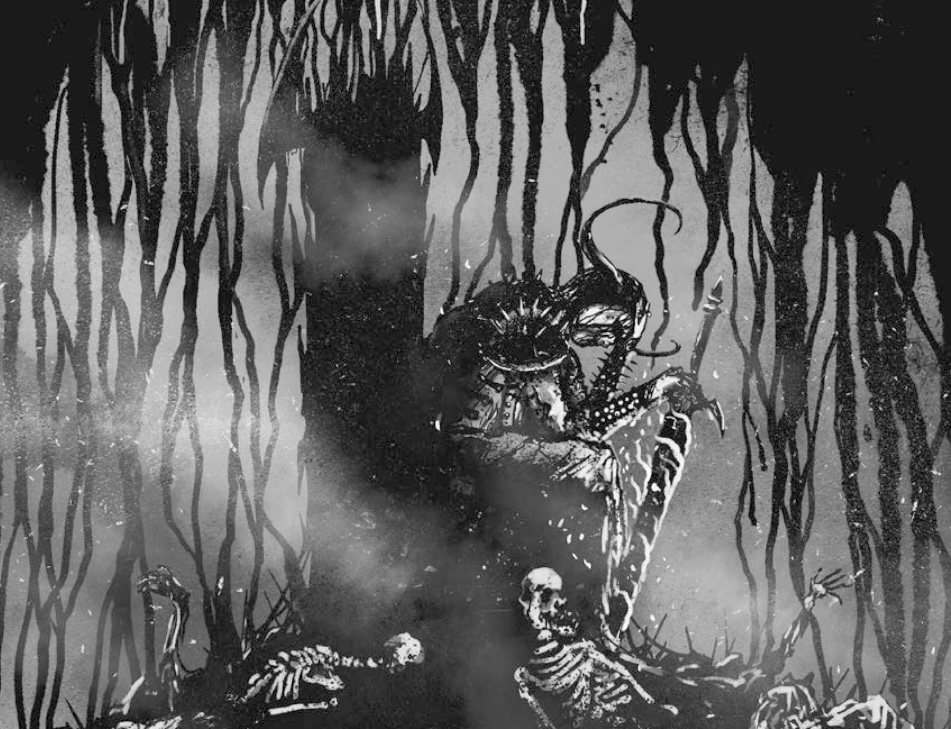
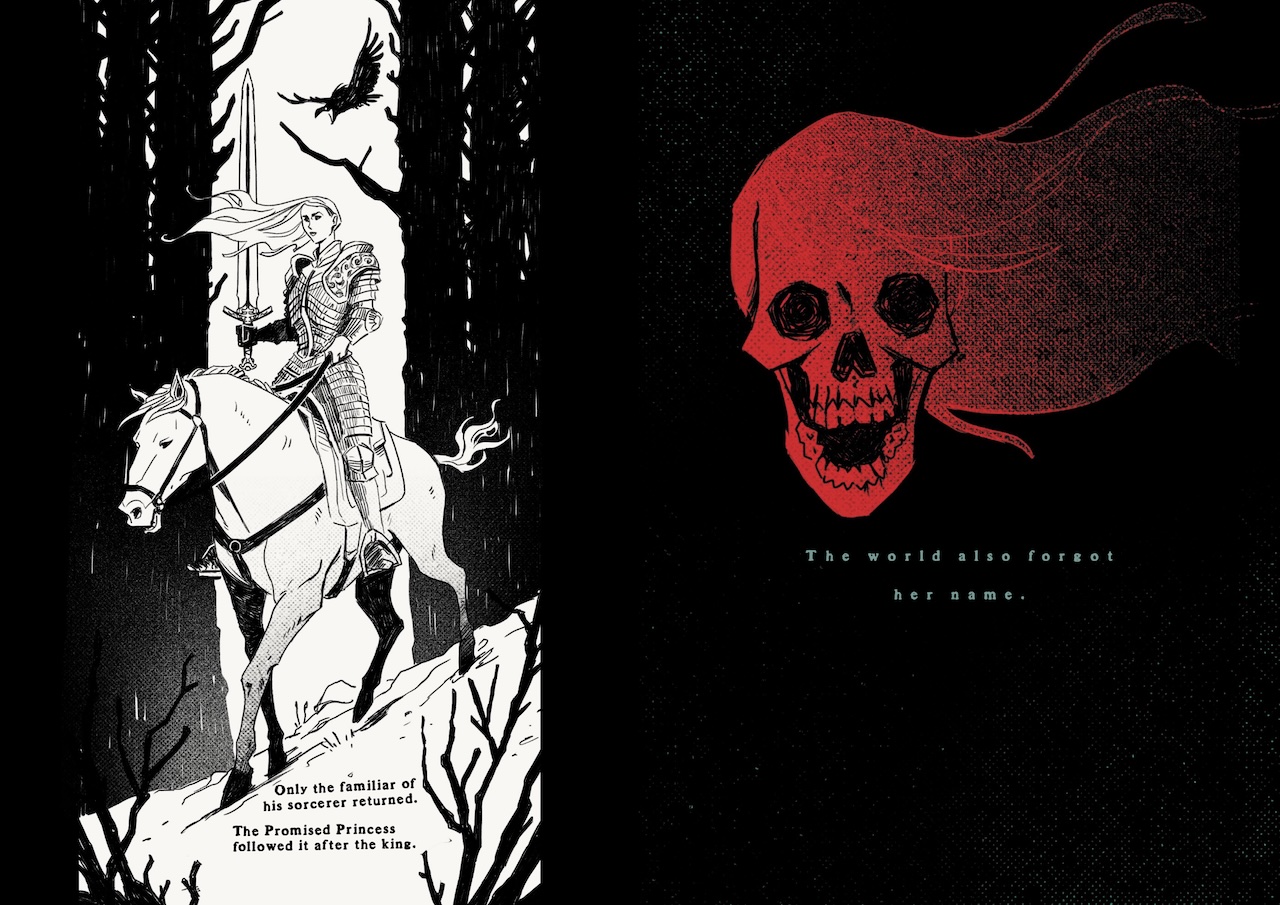
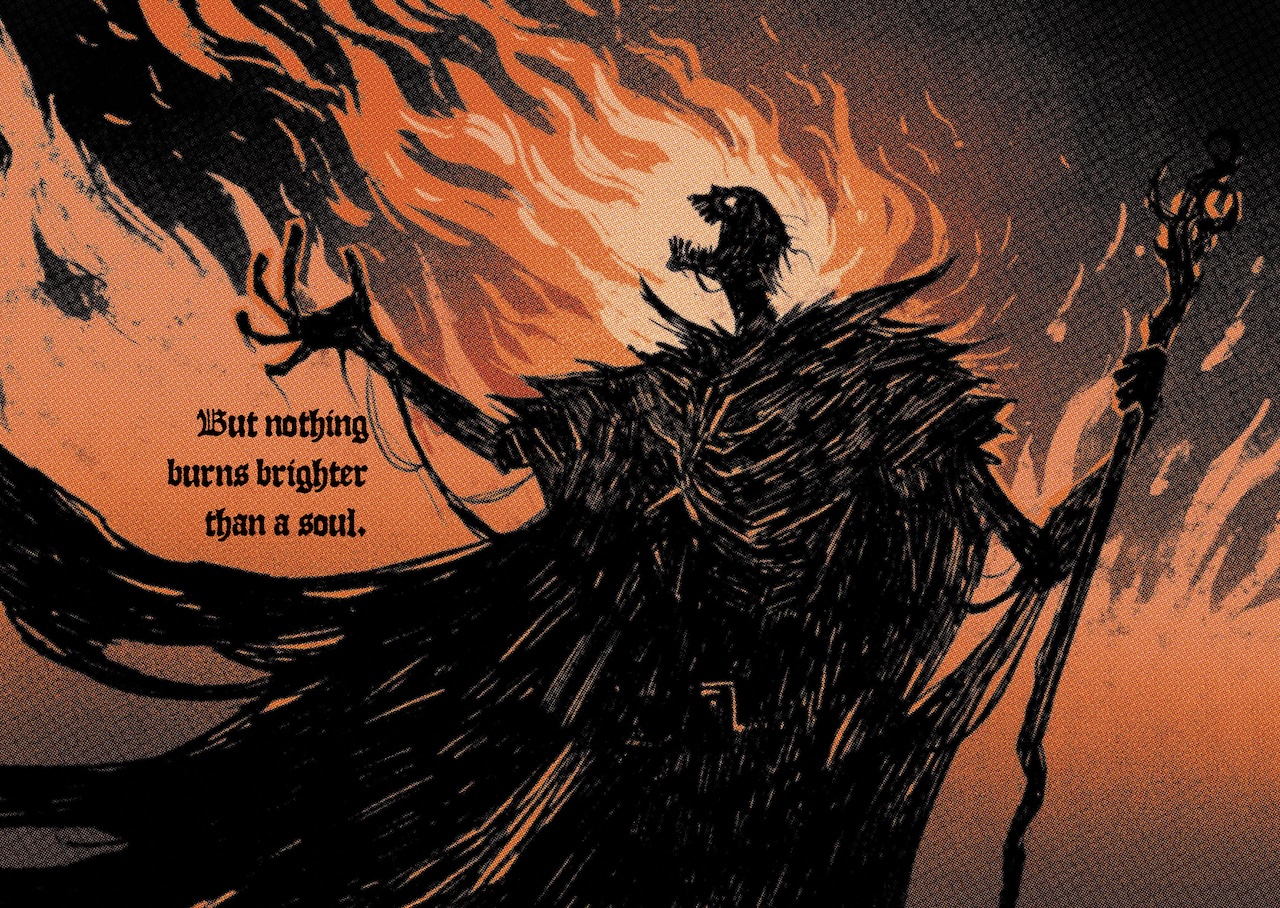
The intro to the adventure is prose and art, luxuriously spread over several pages. A nice bit of story telling that is very reminiscent of video game cut scenes. We learn about an arrogant king, cursed by the gods to become a monster. I wonder if he will show up later? Tania isn’t going to tell us right away. But if you’ve read a book no doubt you’re aware of foreshadowing.
I don’t think I’ve seen another module approach breaking up the various sections that make up the adventure in this way. It’s very dramatic: it really help demarcate the various points in the adventure. Each section has these pages of bridging art and text that reorient the reader for what is to come. I really enjoyed the graphic design of these sections.
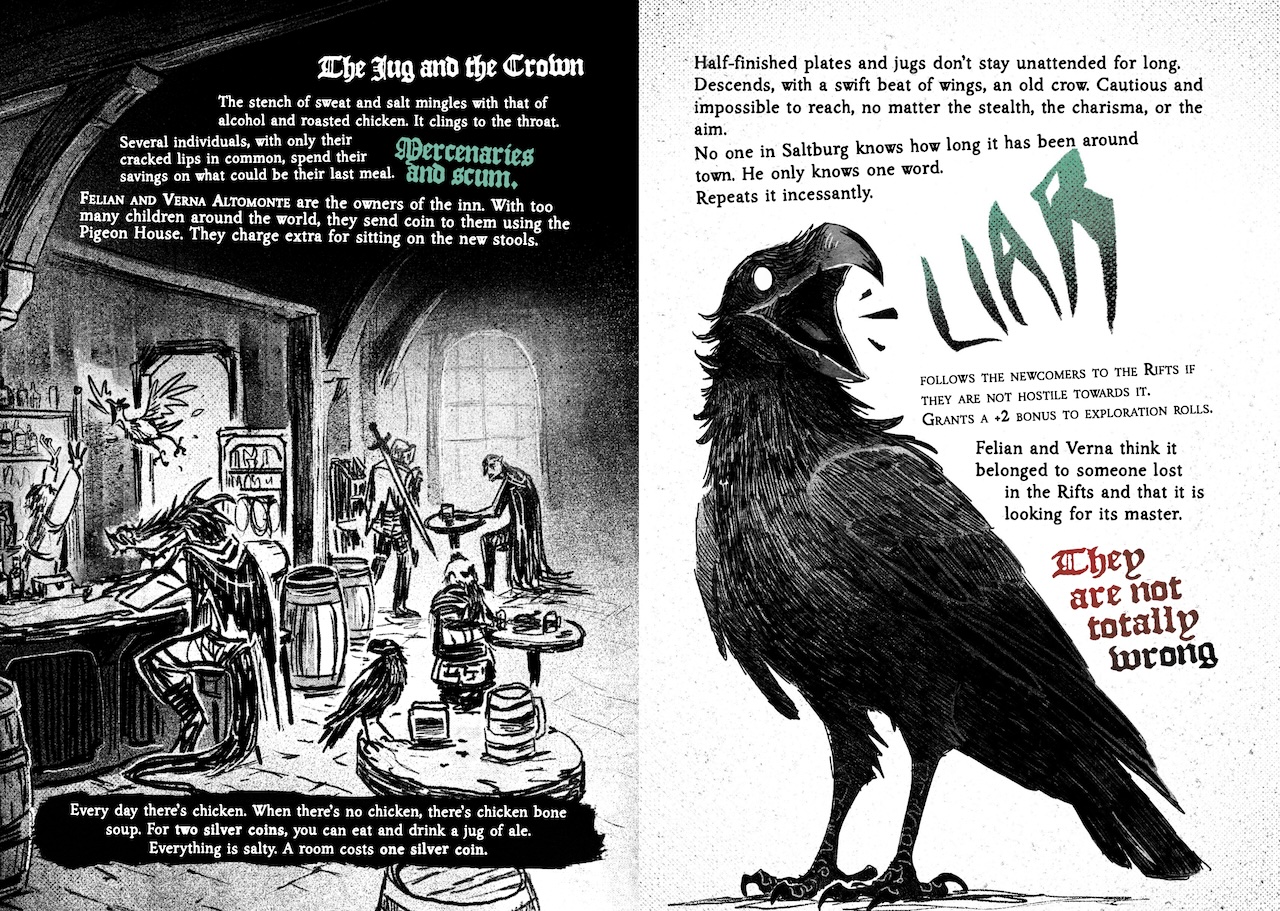
A different sort of module would tell you if the crow’s master is lost in the rifts or not, rather than leave it as a hash tag no spoilers mystery for the GM. — Me on BlueSky
The module opens with a description of the small town of Saltburg, where the adventurers can meet some hirelings, the crow above, and get ready to venture out into the wilderness. There isn’t too much to this town, which is fine, it’s not the main event for this module. The hirelings are interesting and dynamic. They feel like the main reason this town is described at all. We also learn what makes them particularly interesting on the page after they are all described.
Tania’s approach to writing Crown of Salt reminds me very much of the work of Patrick Stuart, especially Deep Carbon Observatory and Silent Titans. Not so much in terms of the modules content, but more around how the module is structured. Patrick often hides details from the GM, so that the act of reading the module comes with a sense of discovery that is mirrored by the players. Some people find this annoying, they have a vision of maximum table utility that demands tidy summaries of everything that’s going on. Certainly one way to make an adventure, but I think it’s reductive to think a more creative approach won’t work.
In the case of the crow mentioned above, knowing its backstory likely won’t impact how the encounter is run at the time the party first meets the bird. (And if you read the whole module, you’ll perhaps recall its deal.) With the hirelings you are a similar position. Even if you slavishly flipped from page to page only when required, you could run the encounter where the party does their recruiting, not knowing the hirelings share a dark secret. Tania’s approach makes for a much more engaging read of the module, and in general I think she avoids some of the issues that arise from being coy with all the details.
We in the business might call this a Flux Space™. I can see why Jason enjoyed running this with Trophy Gold, it feels like a great fit for how that game works, and its vibes. The exploration rules remind me of climbing from Veins of the Earth, perhaps an inspiration. — me on bluesky
The start of the module shares d12 reasons to risk ones life, each pushing the players to search for the fallen king (the Cantigaster), his temple, etc. I generally don’t care if an adventure includes hooks or not. I think the only hook you need is the social contract, “I bought this module so that’s what we’re doing,” but the hooks included in this book are good all the same. They do a good job tying the party to the adventure, and also help speak to the larger world. Regardless of how it comes to pass, the party will venture from the town to the rifts, in search of the adventure.
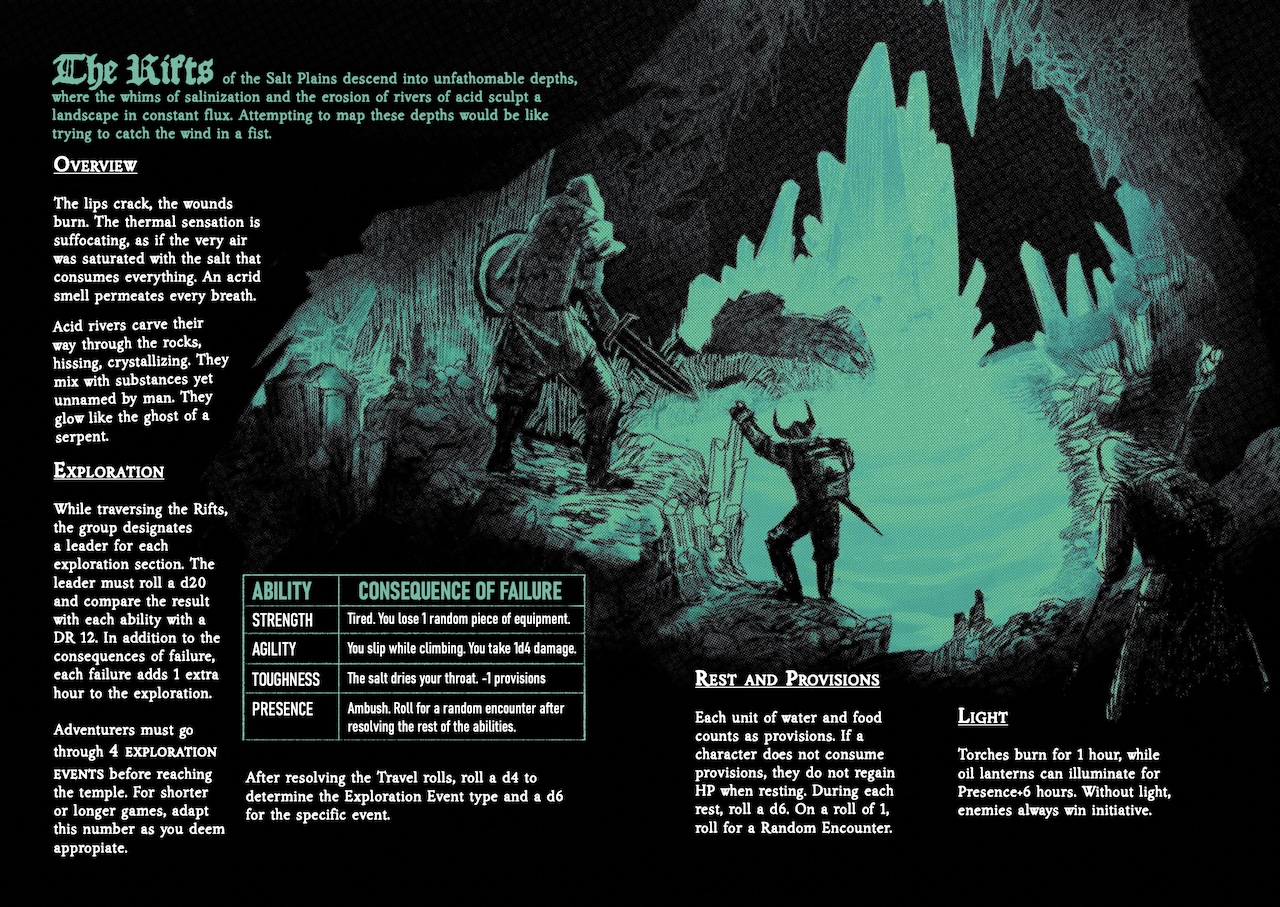
The rifts are presented as a sprawling unmappable space. My friend Nick calls this sort of site a flux space. Tania shares her rules for exploring such a space, which are very reminiscent of the climbing rules from Viens of the Earth. I’m curious to see how they work in play. Reading them I like them. She manages to capture a lot: how much time passes while travelling, if the players are injured along the way due to the route, the loss of provisions, the loss of equipment, and random encounters. To reach the temple, where they should expect to find the fallen king, the players will need to experience 4 exploration events. This approach is meant to simulate travelling through a weird messy underworld.
The encounters here are all pretty fantastic. There are 4 types of events, and 6 possible encounters per event. When you explore you will roll a d4 and a d6 to see what the players encounter. The encounters are all really engaging. It’s hard to pick my favourites. Many will lead to fun situations during the course of a game. I can see how this adventure would work so well with Trophy Gold. The module’s loose structure lends itself well for the similarly unstructured exploration rules of Trophy Gold.
There are a few places where the challenge of the module feels like it veers into rocks fall you all die territory. For example, one of the monsters has a random power that increases gravity in the area: the players must pass a DR12 test or die. There isn’t really anything the players can do to prepare for this situation, it’s a random power that might occur on a random round of combat. There are a few places where it felt like the module was challenging in a way that might not be fun.
This section has some layout choices I found a bit confusing, or places where the placement of information is a hinderance. There is a mini dungeon within the rifts, the Tomb of the Promised Princess. Instructions for finding the tomb are included with the description of the temple, and those are found well after the instructions for exploring the rifts: “only reachable by the guidance of the Latrofax or by rolling a repeated result in an exploration event.” It’s not unreasonable to imagine someone running the rifts portion of the adventure, unaware they need to watch out for duplicate entries. (Earlier, there are instructions on the page following the instructions for exploring the rifts, “Roll a d6 before determining the Exploration Event. On a 1, skip directly to the Promised Princess event. The chance increases by 1 each time.“ Is the intention to use both? I’m not so sure.)
Crown of Salt concludes with a small temple dungeon. You are stalked by the Cantigaster. Tania suggests he shows up when convenient or interesting, but offers up some simple random chance rules if just having him jump scare the players offends your no quantum ogres OSR sensibilities. — me on bluesky
The adventure ends with a small dungeon. The cut scene that introduces this section explains more of the background for the whole adventure. One last twist: a primordial god! The adventure really leans into Mork Borg’s vibes. Like Deep Carbon Observatory, the players will be stalked by the main antagonist of the dungeon, the Cantigaster. This dungeon is flavourful, like the rest of the module. Tania switches to a more straightforward layout at this point. I find the keys a little long to my taste, but I am a fan of tweet sized room descriptions.
We have made it this far and I haven’t even talked about the layout and art. Crown of Salt is beautiful. A lot of people try (and fail) to ape Johan Nohr’s style when it comes to making modules for Mork Borg. Often books just look messy and half assed, they don’t have the graphic design chops to pull off what Johan accomplished with Mork Borg. With Crown of Salt, Tania’s made a really lovely book. There are are occasional missteps, but in general I think she’s made something where the graphic design contributes to the story telling. Her art is fantastic. Like Gus or Luka, it’s always impressive to see someone who can do it all.
I really loved Crown of Salt. One of the coolest modules I’ve read this year. I regret not grabbing it sooner. I wanted to make sure I talked about it before the year was done. Telling you about it feels like a good way to close out 2026.
G+ died in slow motion. There were redesigns people hated. Tweaks and changes throughout its life, as Google tried to make it work the way they wanted. The site was shuttered in April 2019. The social network was never the hit Google wanted, but it was a weirdly popular RPG space—certainly the epicentre of the best parts of the OSR for a period of time. People never stopped posting, right up until the end.
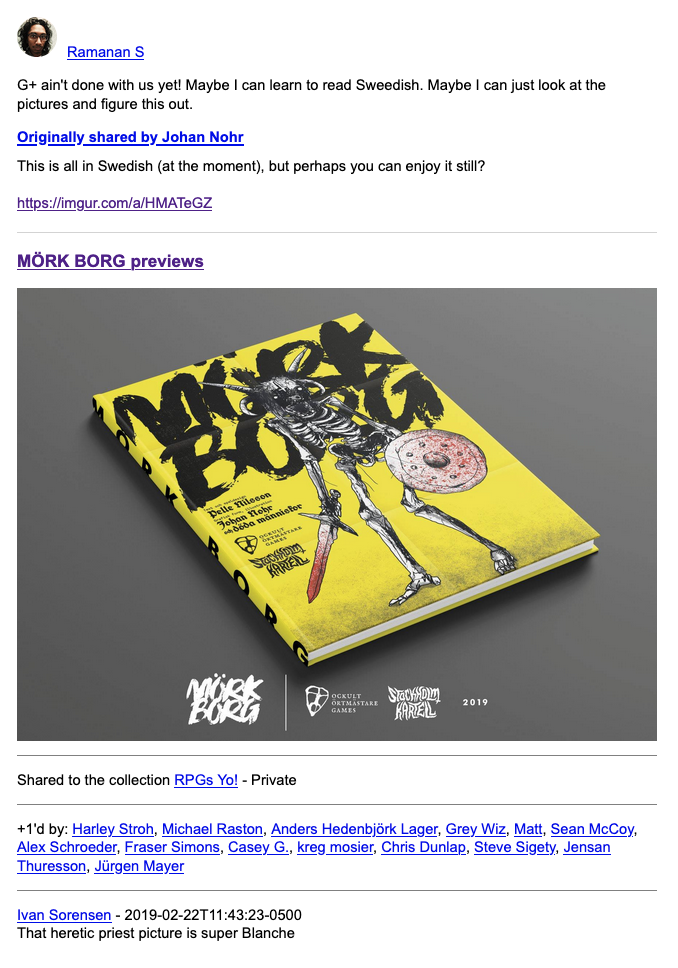
I remember seeing pictures of Mörk Borg in the dying days of G+ and knowing I wanted it despite not knowing what it even was. Despite it being written in Swedish.
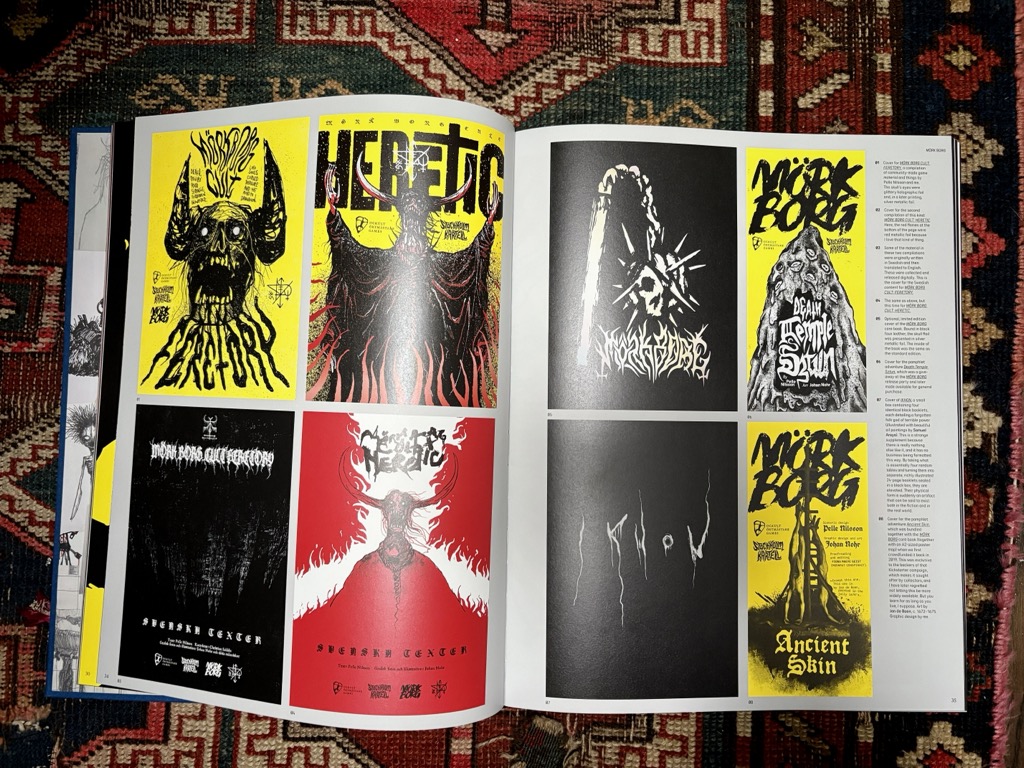
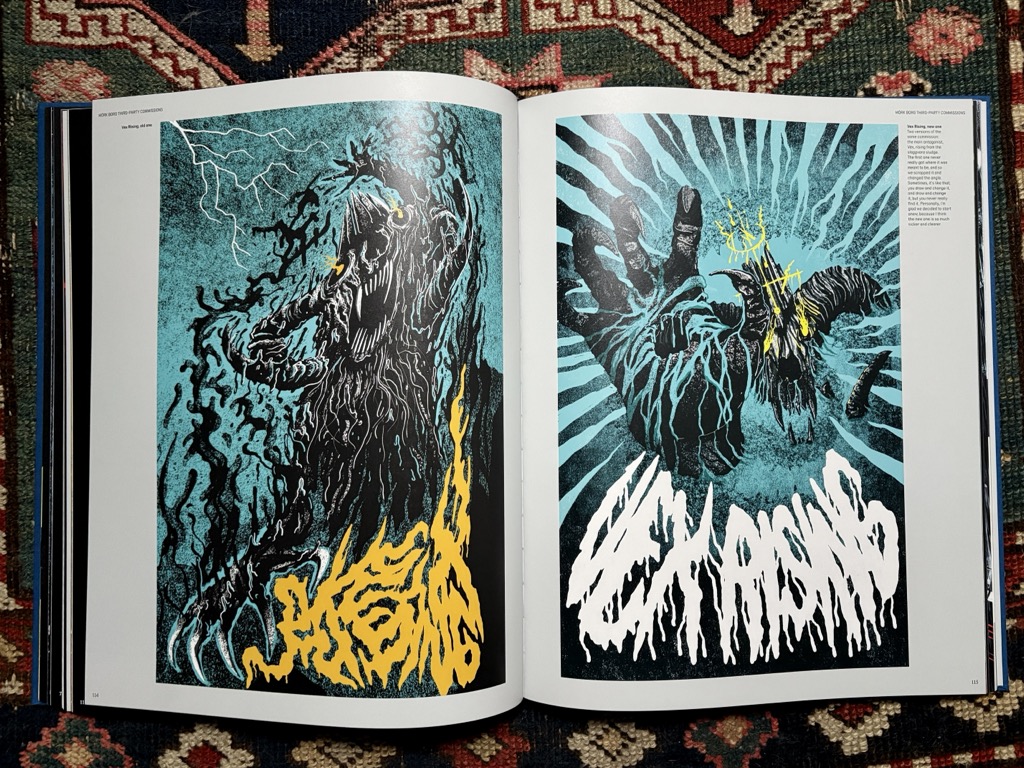
There is lots of love about Mörk Borg, but I believe a large part of its success is due to the bananas art and graphic design of Johan Nohr. Clayton Notestine has written at length about what makes Mörk Borg’s graphic design so fantastic, so I don’t have to. I get annoyed when people are dismissive of Mörk Borg’s graphic design. You can flip to the back of the book and see the adventure Johan laid out: neat, tidy and functional. Clearly he could have made the whole book like that if he wanted to. The excitement on the page is a choice. I digress.
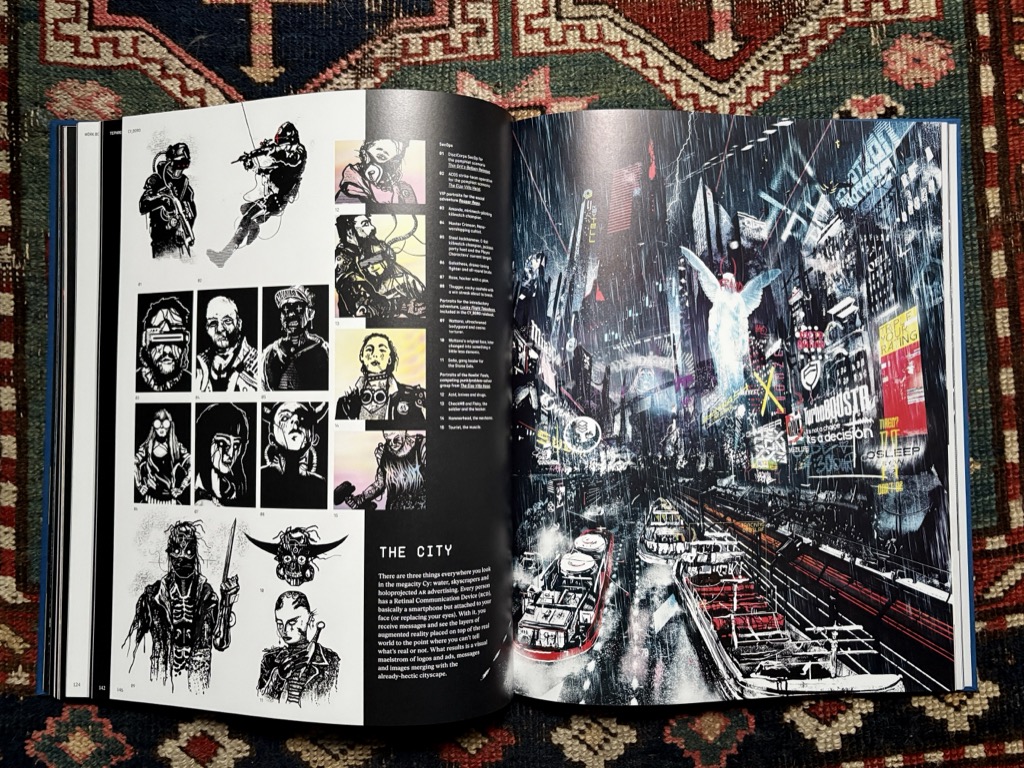
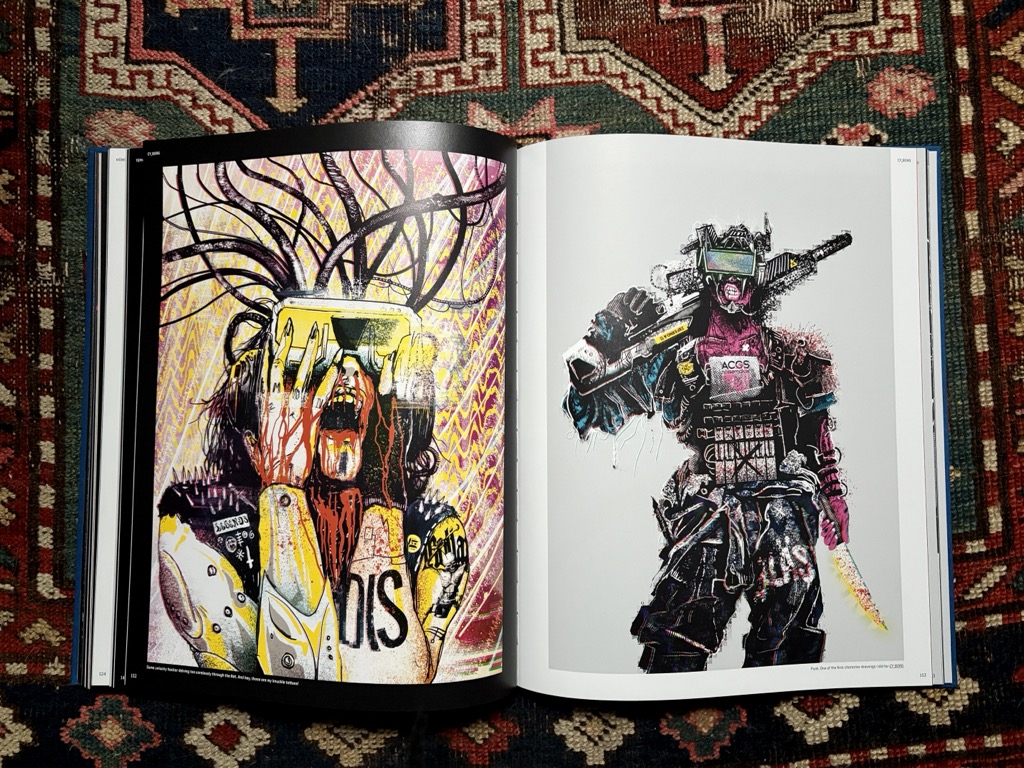
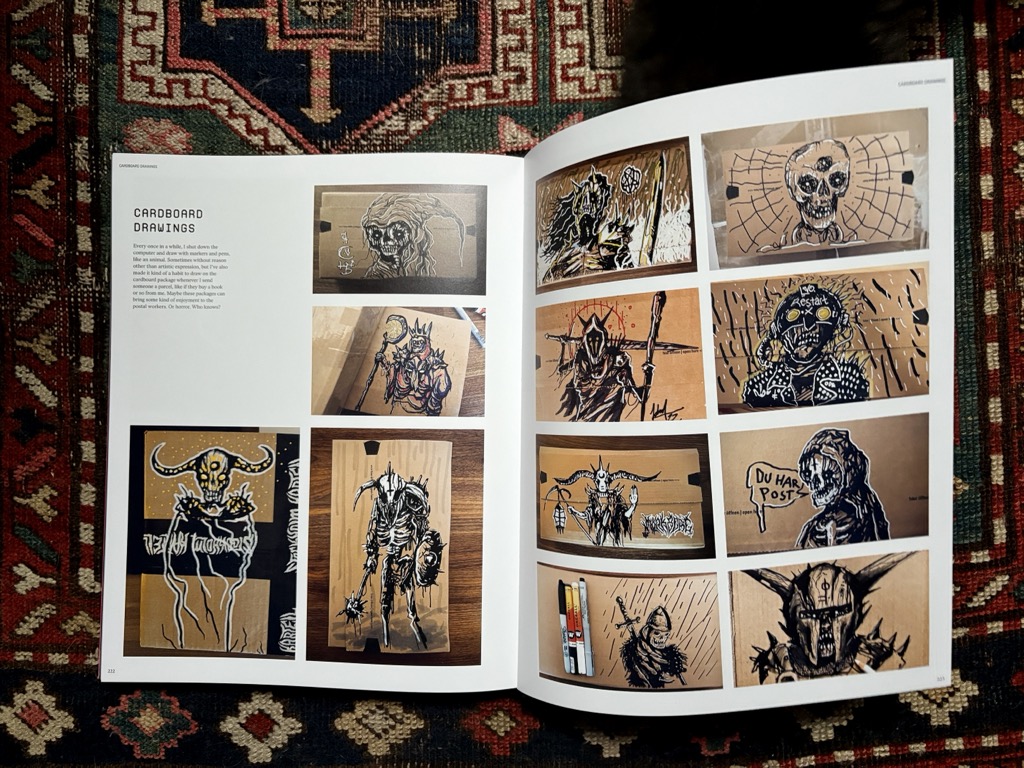
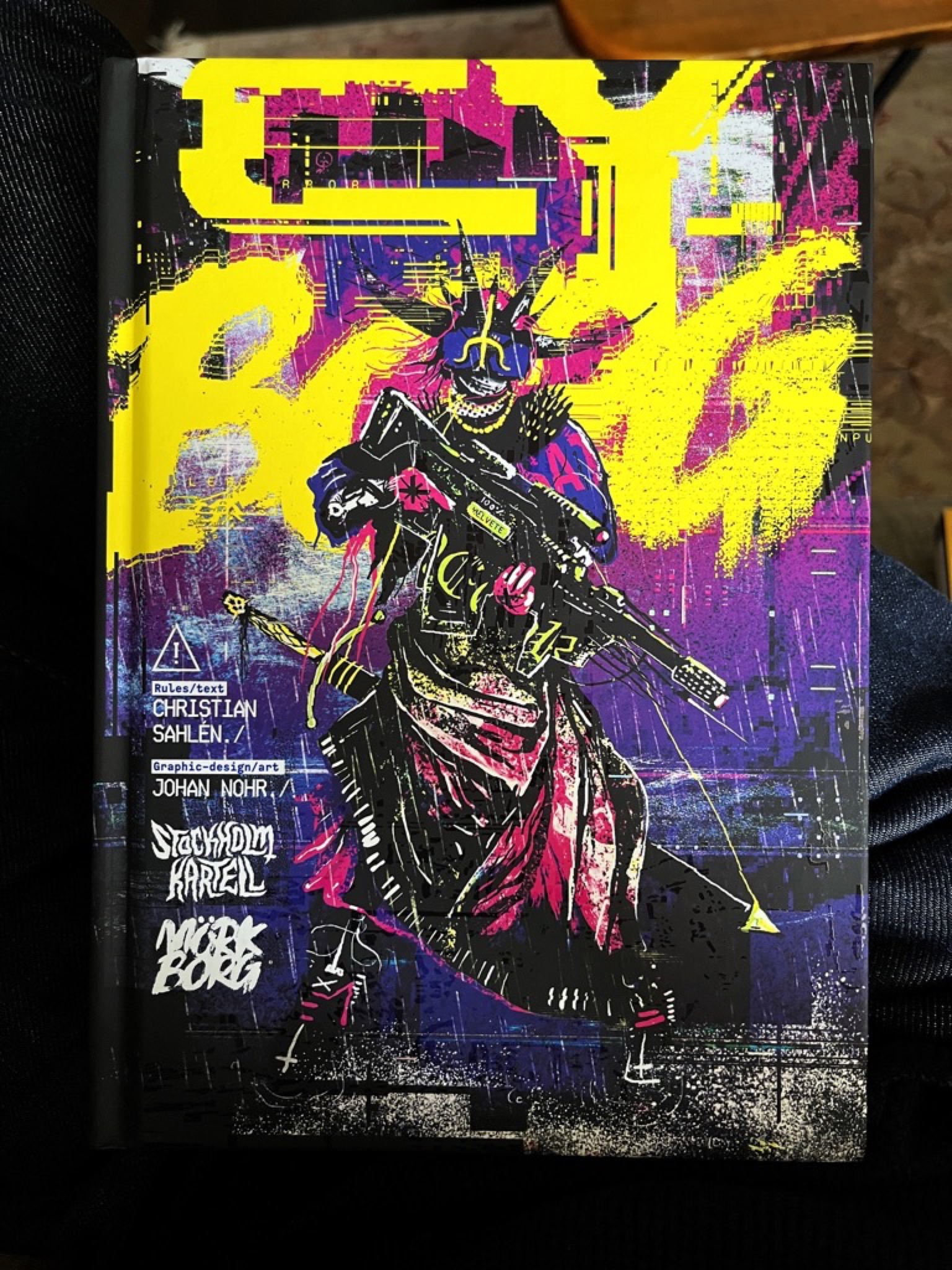
Johan has produced a lot of art for the RPG scene since my first encounters with his work. He did the graphic design and art for Into the Odd’s fancy edition, showing the world he isn’t a one trick pony. He did the graphic design for CY_BORG, showing the world he can make something that feels cohesive with Mörk Borg, while managing to be its own thing. He’s painted countless covers, pictures of dogs, pictures on cardboard. The man keeps himself busy.
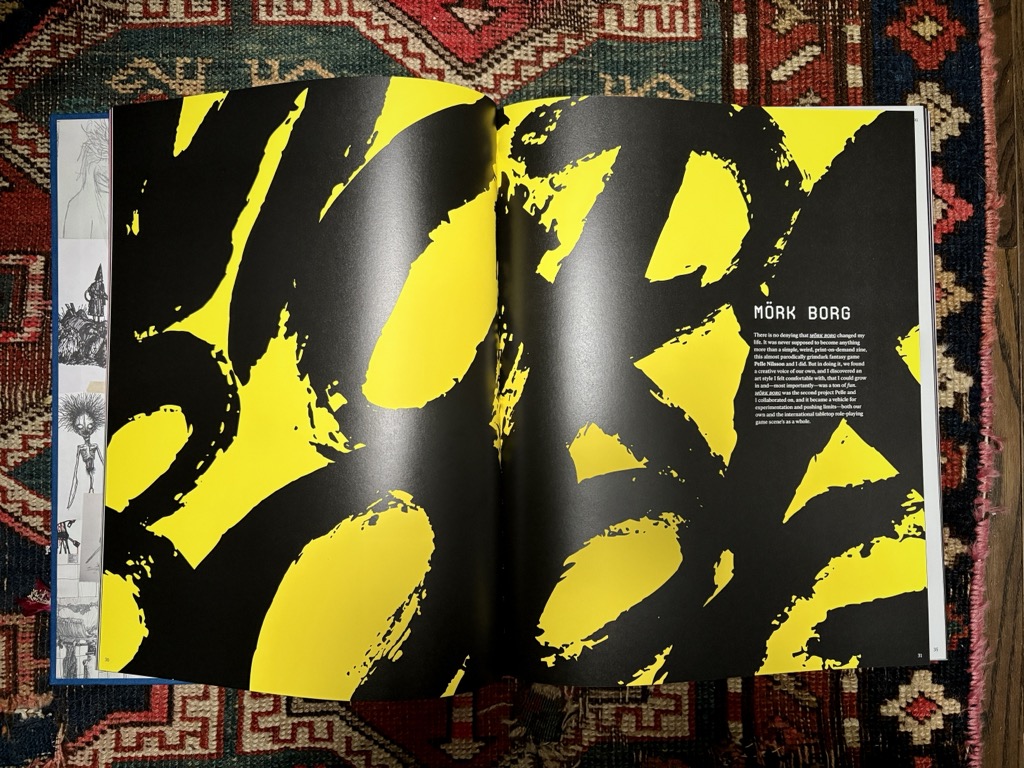
Art by Nohr is a chonky coffee table art book, collecting work from 2006 to 2023. The book was published via one of those kickstarters I backed without really thinking about any of the costs. I paid so much money to ship this book to my actual house. A heart breaking amount. If you know me you know I don’t ship fucking nothing to my house, shipping makes me crazy. I have books waiting for me across the globe, one day I’ll see them. But this book I was too hyped for.
The book is massive and beautiful. The sort of book you want to lay flat on your dining table and flip through slowly. As I write this post it’s sitting next to me, but I find I don’t actually have anything interesting to say. I love the intensity of Johan’s art. It’s interesting to see 20 years of work in one place. What else is worth talking about? The book is sitting on a shelf next to art books for Anders Zorn, Mary Cassatt and Helen McNicoll, and Denyse Thomasos. He keeps them good company.
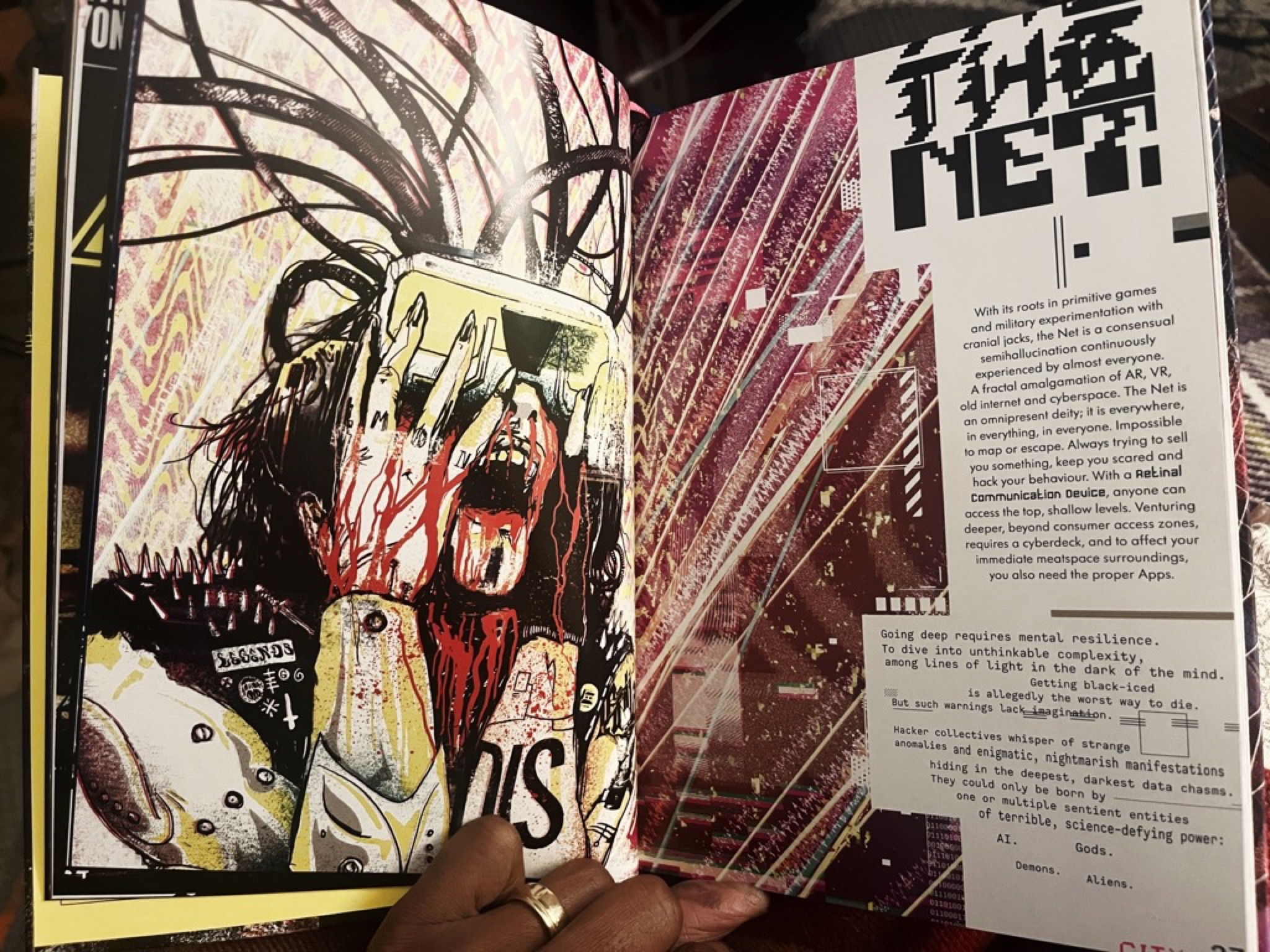
I was looking for minis at the Sword and Board when I spotted a copy of CY_BORG sitting on a shelf. I’ve been waiting for this book to show up locally since it was first announced: I hate paying for shipping. I’m honestly not that interested in Cyberpunk as a genre, but I am very interested in most everything Johan Nohr is involved in. Mork Borg has some of the best art and graphic design you’ll see in an RPG book. Paired up with Christian Sahlén, the duo have created quite the book.
Like Mork Borg the world of CY_BORG is shared as short vignettes. There is detail and flavour to jump off from, but it’s far from overwhelming and very open ended. You can take the world in your own direction.
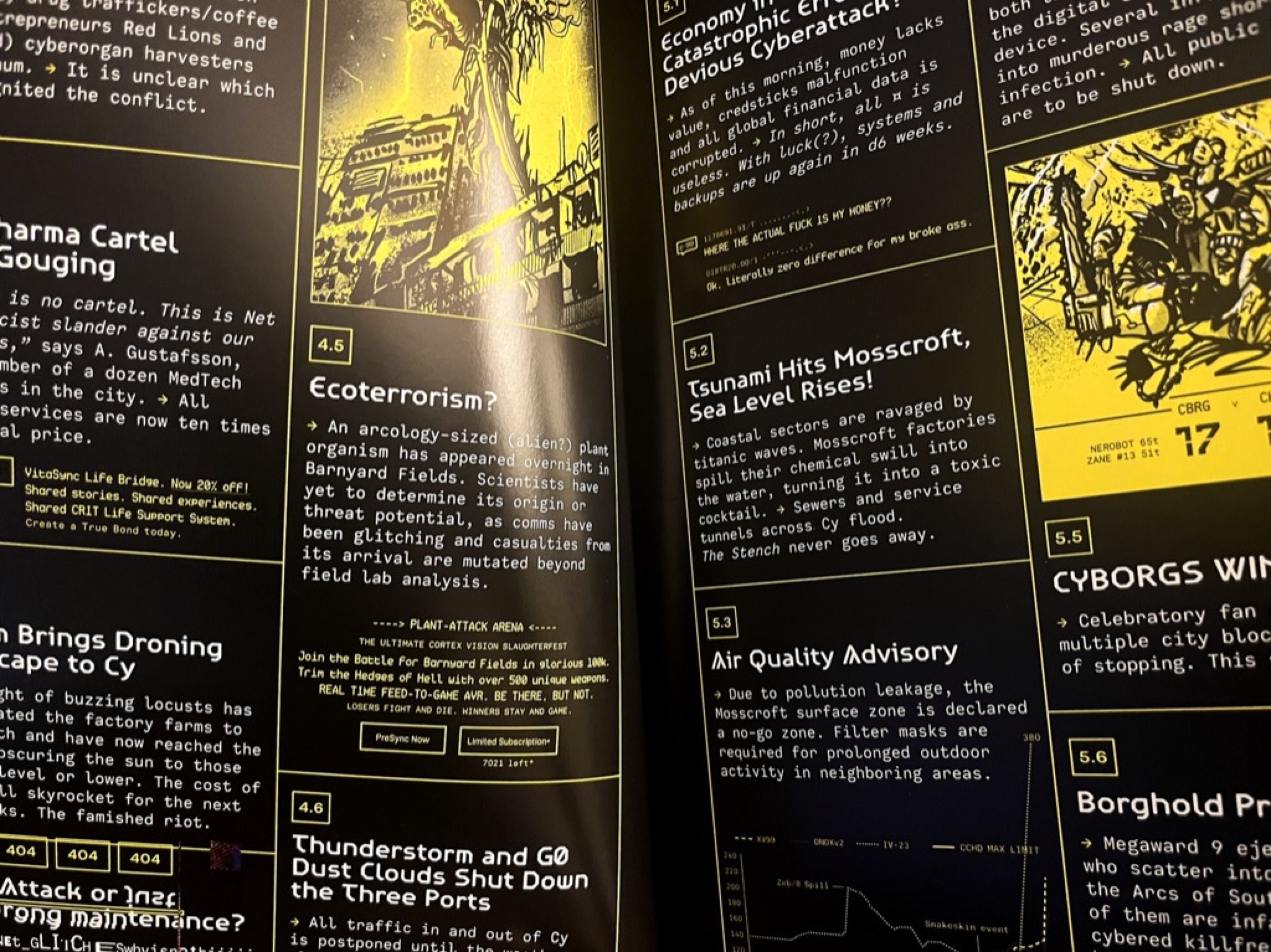
Borrowing from Mork Borg there is also a campaign calamity mechanic where things progressively get worse as the game moves along, ending with a world ending event. In CY_BORG we have news headlines instead of omens.
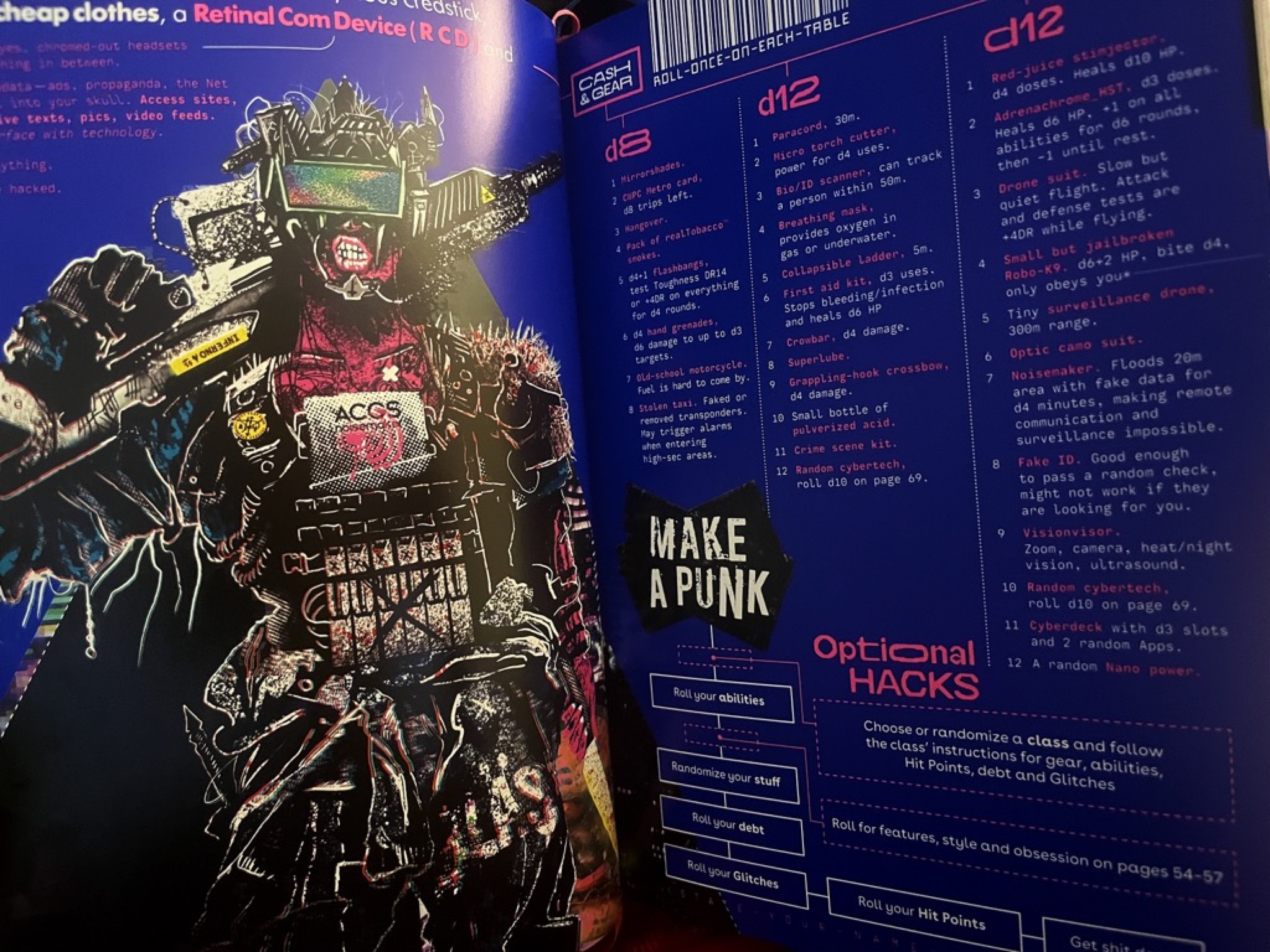
Like Mork Borg the default is simple characters who will mostly be defined by their gear. You also have optional classes if you want more specificity (and mechanics). I like this approach. I also like all the pink.
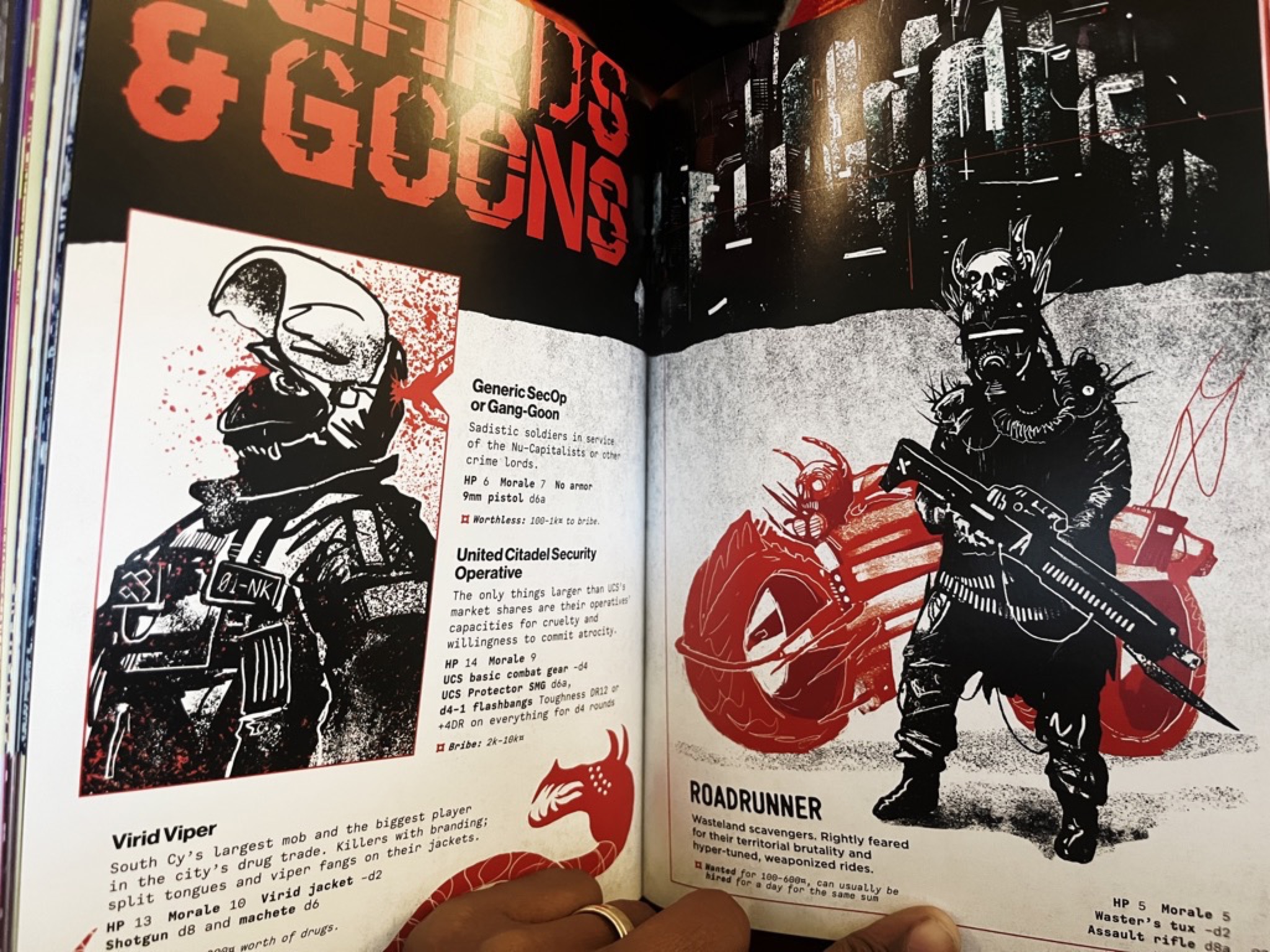
A good bestiary will double as world building. The creatures shared in this book tell a story about the world. Most creatures note how much it costs to bribe them, for example.
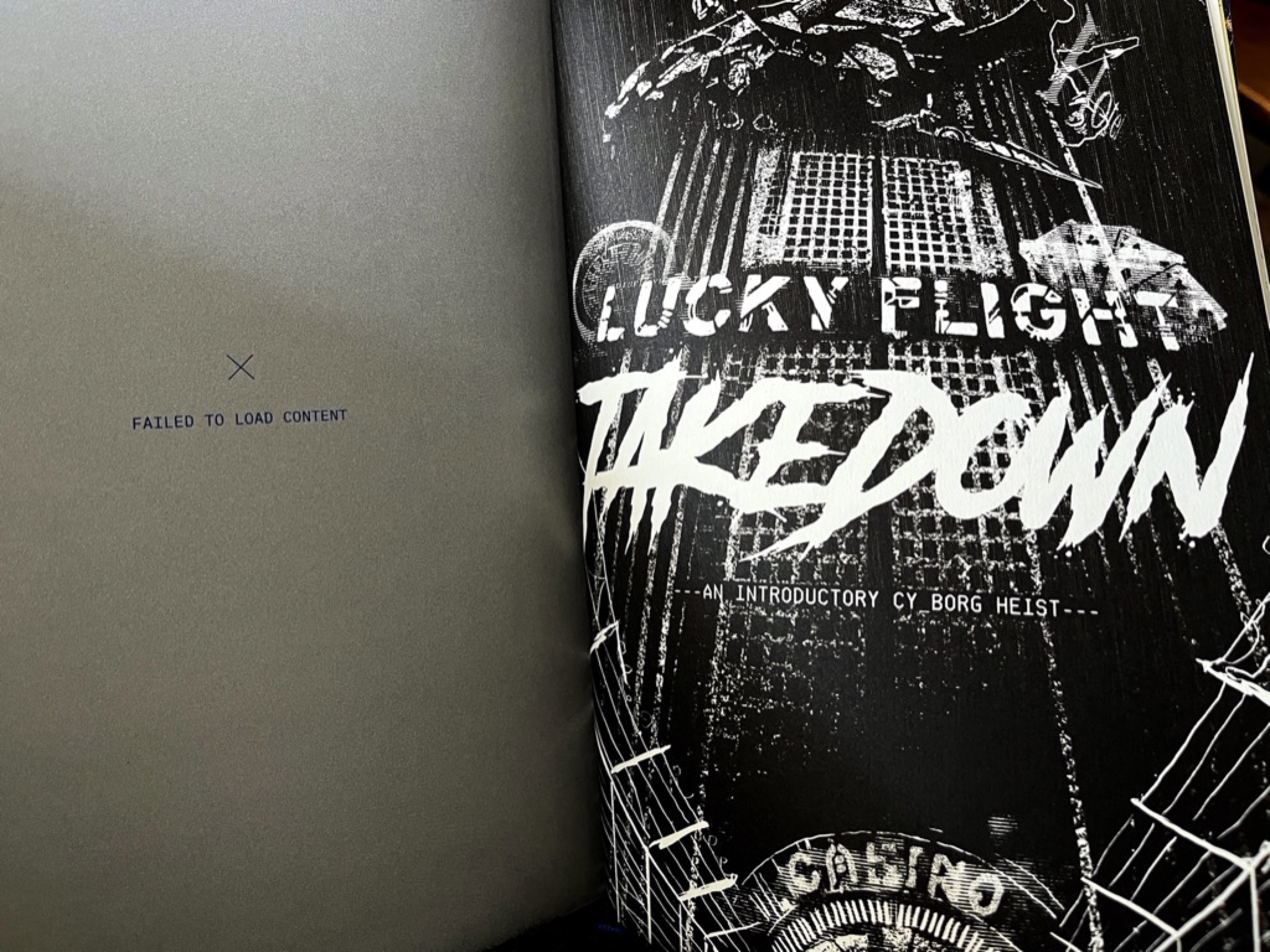
Adventures are a great thing to include in your game: they help tell the reader what the game is all about in a way that’s useful and practical. You can read about the sorts of games one might play with these rules. The included adventure has the players helping an indebted neighbourhood. They must break into a casino and destroy the records of their debt, stored in an “offline database”. Like Mork Borg, the layout of the adventures shifts to something far more utilitarian and practical, while still having some style.
My friend Emmy wrote a much longer, better, review of this book, if you want to read something with some more substance. I found the Ben Milton looked at the book as well: you can watch him flip through the whole book. I had similar feelings to the two of them when reading this game’s rule 0: “Player Characters cannot be loyal to or have sympathy for the corps, the cops, or the capitalist system. They might find themselves reluctantly forced to do missions for them or their minions. But make no mistake—they are the enemy.” There’s nothing to disagree with here, but these sorts of declarations always feel a bit dorky. If you as a player aren’t making this choice, it’s kind of a meaingless action on everyone’s part. More so, you could probably play an interesting game, one where you learn something about the world and the dark nature of capitalism, playing dirtbag cops, corporate goons, etc. All of that said, the sorts of people that will get overly upset about this rule are probably the sorts of people you want keep out of a healthy gaming community, and in that way this rule is doing the work it needs to.
I really enjoyed reading CY_BORG. I am keen to get this to the table. The art and writing really pull you in. It feels like an easy game to get into: the rules will be familiar, and there is a lot in the book to help get you going with your game.
This was originally a series of tweets, but Twitter isn’t long for this world. I thought it best to post something more permanent over here.